Why Hiking Changed My Health Mindset Forever
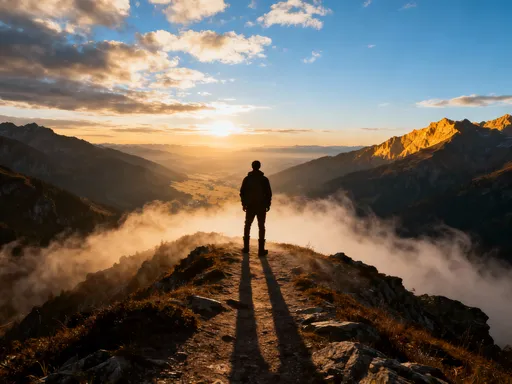
I never thought putting one foot in front of the other could reshape how I see health. For years, I chased quick fixes—crash diets, intense workouts, supplements that promised miracles. But on a quiet mountain trail, something shifted. It wasn’t just the fresh air or the view—it was the realization that true wellness isn’t about perfection, but presence. Hiking taught me to listen to my body, move with purpose, and redefine what it means to be healthy from the inside out. What began as a simple escape from daily stress evolved into a profound transformation in how I understand well-being. This journey wasn’t about losing weight or building muscle; it was about reclaiming a relationship with my body that felt kind, sustainable, and deeply human.
The Breaking Point: When Fitness Became a Burden
For much of adulthood, fitness felt less like self-care and more like a relentless performance review. Every morning began with stepping on the scale, checking progress photos, and reviewing yesterday’s calorie log. A missed workout triggered guilt. A slice of cake felt like failure. The gym, once a place of energy, became a site of obligation—where every movement was measured, every rep counted, and every rest day questioned. The pressure to maintain a certain image overshadowed any genuine sense of well-being. Exercise wasn’t joyful; it was a transaction: burn calories, earn worth.
This mindset didn’t just drain emotional energy—it took a physical toll. Chronic fatigue, frequent injuries, and disrupted sleep became routine. Despite appearing 'fit' by societal standards, I felt disconnected from my body. I was training it like a machine, ignoring its signals for rest, nourishment, and peace. The idea of health had been reduced to aesthetics and metrics, stripping away the essence of what it means to feel truly alive. It was during a weekend getaway, almost by accident, that I found myself on a forest trail with no agenda other than to clear my mind. There was no tracker, no playlist, no timer—just walking. And in that simplicity, I experienced something unfamiliar: movement without judgment.
Hiking entered my life not as a planned fitness strategy, but as an invitation to pause. Unlike the rigid structure of gym routines, the trail offered unpredictability and freedom. I didn’t have to keep up with a class, match someone else’s pace, or complete a set number of laps. I could stop to breathe, to look, to simply be. This shift—from achievement to experience—marked the beginning of a new relationship with physical activity. It wasn’t about how many miles I could log or how fast I could climb, but about how I felt while doing it. For the first time in years, movement felt like a gift, not a debt.
Nature as a Mirror: What the Trail Revealed About My Body
The natural terrain of hiking trails offers a unique kind of feedback—one that doesn’t rely on mirrors, scales, or apps. On uneven ground, the body must adapt in real time. Roots, rocks, and changing elevations demand balance, coordination, and awareness. Each step requires engagement, not just of the legs, but of the core, hips, and even the mind. There’s no autopilot on a trail. This constant micro-adjustment fosters a deep connection between body and environment, teaching us to move with intention rather than force.
What surprised me most was how this physical challenge mirrored emotional resilience. On steeper climbs, I learned to pace myself—not out of weakness, but out of wisdom. I discovered that stopping to catch my breath wasn’t failure; it was strategy. The trail didn’t punish slowness. It rewarded presence. Over time, I began to apply this mindset beyond the hike: accepting limits without shame, honoring fatigue without fear, and recognizing that rest is not the opposite of progress—it’s part of it.
Perhaps the most liberating aspect of hiking was the absence of body scrutiny. Without mirrors or comparisons, I stopped seeing my body as an object to be fixed. Instead, I began to appreciate it for what it could do—carry me uphill, stabilize on slippery rocks, recover after long distances. This shift toward body neutrality was transformative. I wasn’t trying to love every part of myself; I was learning to respect what my body enabled me to experience. Functional fitness—strength, endurance, and mobility that serve daily life—became more valuable than any number on a scale.
Studies in embodied cognition support this experience, showing that physical movement in natural environments enhances self-perception and reduces body dissatisfaction. When we move through nature, we’re less likely to engage in negative self-talk because our attention is outward—on the path, the trees, the sounds. This external focus creates space from the internal critic, allowing for a more compassionate relationship with ourselves. On the trail, I wasn’t trying to change my body. I was simply using it, and in doing so, I began to appreciate it.
From Metrics to Mindset: Redefining Health Success
In the world of digital fitness, success is often quantified: steps taken, calories burned, heart rate zones achieved. While these metrics can offer useful insights, they can also create an unhealthy dependence on external validation. When every movement is tracked, it’s easy to lose touch with internal cues—hunger, fatigue, joy, energy. I realized I had outsourced my sense of well-being to a device, trusting a screen more than my own body’s signals.
Hiking forced a reset. Without a tracker, I had to rely on how I felt. Was I breathing easily? Did my legs feel strong? Was I enjoying the walk? These became my new indicators of success. A hike wasn’t ‘good’ because it burned 500 calories—it was good because I returned home feeling clear-headed, calm, and connected. This shift from data-driven goals to experiential outcomes was revolutionary. Energy levels, mental clarity, and emotional balance became the true markers of health.
Research in environmental psychology confirms that time in nature significantly reduces cortisol, the body’s primary stress hormone. A 2019 meta-analysis published in Scientific Reports found that spending at least two hours per week in natural settings was associated with higher self-reported well-being and lower levels of anxiety and depression. The rhythmic nature of walking, combined with exposure to greenery and fresh air, activates the parasympathetic nervous system—the ‘rest and digest’ mode—counteracting the chronic ‘fight or flight’ state many of us live in.
For me, this meant fewer afternoon crashes, improved focus at work, and a greater capacity to handle daily stressors. I no longer needed a post-workout endorphin spike to feel okay. The steady, cumulative effect of regular hikes created a baseline of calm that gym sessions never provided. I wasn’t chasing highs; I was building resilience. And perhaps most importantly, I began to trust my body again—not as a problem to be solved, but as a partner in living well.
The Hidden Workout: How Hiking Transforms the Body Naturally
While hiking may not look like a traditional workout, its physical benefits are both broad and profound. Unlike the repetitive motions of treadmill walking or stationary cycling, hiking engages the body in three-dimensional movement. Ascending a hill activates the glutes and hamstrings more intensely than flat terrain. Descending requires eccentric muscle control, strengthening the quadriceps while improving joint stability. Side slopes and uneven surfaces challenge balance and recruit stabilizing muscles often neglected in gym routines.
Cardiovascular endurance improves steadily with regular hiking. Because trails vary in elevation and terrain, the heart is challenged in unpredictable ways, promoting greater adaptability than steady-state cardio. Over time, resting heart rate decreases, lung capacity increases, and circulation improves. These changes translate into real-world benefits: climbing stairs without breathlessness, carrying groceries without strain, and sustaining energy throughout the day.
One of the most underrated advantages of hiking is its low-impact nature. Unlike running or high-intensity interval training, hiking places minimal stress on joints, making it sustainable over decades. For individuals managing arthritis, past injuries, or general wear and tear, this is crucial. The soft surfaces of dirt paths and forest floors absorb shock far better than concrete or asphalt, reducing the risk of overuse injuries. At the same time, the constant micro-movements required on trails enhance joint mobility and proprioception—the body’s awareness of its position in space.
Additional benefits include improved posture and core engagement. Walking on uneven ground forces the core muscles to activate continuously for balance. Over time, this leads to better spinal alignment and reduced lower back pain. Sleep quality also improves, as physical exertion combined with natural light exposure helps regulate circadian rhythms. Many hikers report falling asleep faster and waking up feeling more refreshed. These outcomes aren’t dramatic or immediate, but they are consistent and cumulative—exactly the kind of progress that supports long-term health.
Building a Sustainable Practice: Making Hiking a Lifestyle, Not a Trend
The beauty of hiking lies in its accessibility. You don’t need a passport, expensive gear, or perfect fitness to begin. Start small: a 20-minute walk in a local park, a gentle loop around a lake, or even a nature trail within city limits. The goal isn’t distance or speed—it’s consistency. Building a sustainable practice means meeting yourself where you are, not where you think you should be.
For those new to hiking, choosing the right trail is key. Look for well-marked paths with moderate elevation gain. Many parks offer color-coded trails indicating difficulty level. Begin with green or blue routes before progressing to more challenging terrain. Wear supportive footwear—hiking shoes or trail runners with good grip—and dress in layers to adapt to changing weather. A small backpack with water, a snack, and a light rain jacket is all you need for short hikes.
Time constraints are a common barrier, but hiking can be integrated into existing routines. Swap a lunch break for a midday walk in a nearby green space. Take weekend family outings to nature reserves. Even urban environments offer opportunities: botanical gardens, riverside paths, and tree-lined neighborhoods can provide a nature-like experience. The key is intentionality—stepping away from screens, slowing your pace, and tuning into your surroundings.
Viewing hiking as self-care, rather than just exercise, helps sustain motivation. It’s not another item on a to-do list; it’s a form of nourishment. When you reframe movement as something that restores rather than depletes, it becomes easier to prioritize. Over time, the habit deepens—not because you’re forcing it, but because you begin to crave the peace it brings. And as the habit grows, so does your capacity for resilience, presence, and joy.
Beyond the Body: How Movement in Nature Shapes Mental Clarity
The rhythmic motion of walking has long been associated with contemplation. Philosophers, writers, and thinkers throughout history have used walking as a tool for clarity. On the trail, this effect is amplified by the natural environment. The soft crunch of leaves, the rustle of wind through trees, the distant call of birds—these sounds create a natural soundscape that calms the mind. Unlike urban noise, which is often jarring and unpredictable, nature’s rhythms are steady and soothing.
This state of gentle attention is similar to mindfulness meditation. As you walk, your focus shifts between the path beneath your feet and the landscape around you. Thoughts arise, but they pass like clouds. Problems that felt overwhelming at your desk suddenly seem more manageable. Creative ideas emerge without effort. Many hikers report solving long-standing dilemmas or gaining new perspectives during a hike—not because they were actively trying, but because the mind was finally allowed to wander freely.
Scientific research supports these anecdotal experiences. A 2015 study from Stanford University found that participants who walked in nature showed reduced activity in the subgenual prefrontal cortex—a brain region linked to rumination and negative self-thought—compared to those who walked in urban environments. Another study published in Frontiers in Psychology demonstrated that just 90 minutes in a natural setting decreased anxiety and improved cognitive control. These findings suggest that green exercise doesn’t just distract the mind—it actively reshapes it.
Solitude in nature also fosters deeper self-awareness. Without the constant input of notifications, conversations, and responsibilities, you’re given space to hear your own thoughts. This doesn’t mean you have to hike alone—many find joy in shared walks—but even in silence with others, there’s room for reflection. Over time, this practice builds emotional regulation, helping you respond to stress with greater calm and insight. The trail becomes not just a path through the woods, but a journey inward.
A New Health Philosophy: Wholeness Over Perfection
Hiking didn’t just change my fitness routine—it changed my philosophy of health. I no longer see well-being as a checklist of achievements or a battle against my body. Instead, I view it as an ongoing practice of integration: body, mind, and environment moving in harmony. Health is no longer something I chase; it’s something I cultivate through daily choices that honor my needs, limits, and joys.
This shift has led me to question mainstream fitness narratives that prioritize intensity, aesthetics, and speed. Why must movement be punishing to be valuable? Why must we earn rest? Hiking has shown me that gentle, consistent activity can be just as transformative—if not more so—than high-pressure regimens. It has taught me to value how I feel over how I look, to celebrate progress that isn’t visible, and to embrace imperfection as part of the process.
True wellness isn’t found in a gym, an app, or a supplement bottle. It’s found in the rhythm of your feet on a forest path, the breath of fresh air filling your lungs, the quiet moment when you realize you’re no longer counting steps—you’re just walking. It’s in the understanding that your body is not a project to be completed, but a companion to be cherished.
If you’re feeling burned out by rigid routines, disconnected from your body, or overwhelmed by the noise of modern life, consider stepping onto a trail. You don’t need special skills or gear. You just need willingness—to move, to pause, to be present. Let nature guide you not toward perfection, but toward wholeness. Because sometimes, the most powerful health transformation begins with a single step—and the courage to keep going.