Wheels and Wonders: Discovering Budapest’s Architectural Soul One Drive at a Time
You know that feeling when the open road meets jaw-dropping beauty? Driving into Budapest, I wasn’t ready for how the city’s architecture would hit me—like a symphony of stone and light. From grand Austro-Hungarian facades to hidden Art Nouveau gems, every turn revealed something extraordinary. This isn’t just sightseeing; it’s experiencing history with the freedom only a car can give. Let me take you through the city’s most stunning structures—seen from the driver’s seat. Behind the wheel, Budapest unfolds not as a checklist of monuments, but as a living story told in brick, tile, and iron. The rhythm of the drive—pausing where you choose, circling back for another look—deepens the connection between traveler and city, revealing layers of design and history that foot traffic alone might miss.
The Freedom of the Open Road to Budapest
Arriving in Budapest by car transforms the journey into part of the experience. Unlike the fixed arrival points of air or rail travel, driving allows you to approach the city from multiple directions, each offering a distinct architectural prelude. Whether coming from Vienna along the M1 motorway or tracing the Danube from Esztergom, the transition from countryside to cityscape unfolds gradually, letting you absorb the shift in landscape and style. The freedom to choose your route, your pace, and your stops means you’re not just visiting Budapest—you’re discovering it on your own terms.
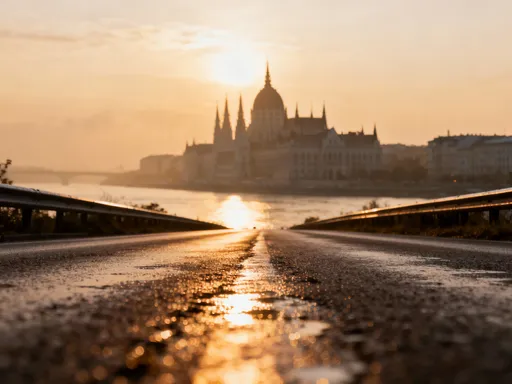
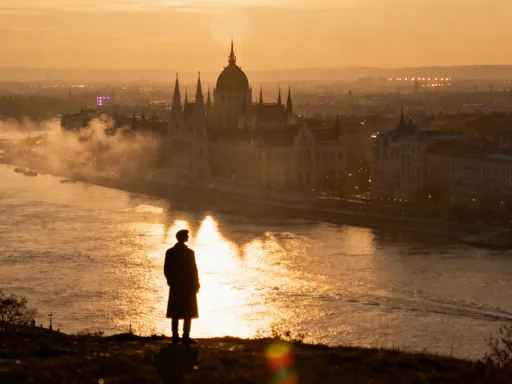
One of the greatest advantages of driving is access to vantage points that are difficult to reach by public transit. Consider the winding road up to the northern edge of the Castle Hill district, where a quiet overlook offers a morning view of the Parliament Building bathed in golden light, its reflection shimmering on the Danube. These moments—spontaneous, unscripted—are made possible by the autonomy a car provides. You’re not bound by bus schedules or metro lines; you can linger at a riverside park, circle back to photograph a forgotten facade, or follow a local’s suggestion to a tucked-away café with a view.
Entry routes into the city also shape first impressions. Approaching from the west, drivers pass through leafy suburbs where early 20th-century villas hint at the city’s architectural diversity. From the south, the skyline emerges gradually, dominated by the dome of St. Stephen’s Basilica and the spires of the Parliament. These approaches offer a narrative buildup, a visual introduction to Budapest’s layered identity. Even navigating the ring roads and bridges provides insight—each structure, from the Liberty Bridge with its elegant latticework to the modern sweep of the Megyeri Bridge, tells a story of engineering and design across centuries.
For travelers with a passion for architecture, this flexibility is invaluable. It allows for a more immersive, personalized exploration. You can time your arrival to catch the late afternoon sun illuminating the rose-hued walls of Buda Castle or plan an evening drive along the Danube Promenade when the buildings are lit like stage sets. The car becomes a mobile observation deck, offering shifting perspectives and ever-changing light on the city’s built environment.
Buda’s Royal Elegance: Hills, Castles, and Grand Facades
Buda, the hilly western half of the city, is where history rises with the terrain. Driving through its narrow, winding streets, you’re immediately aware of elevation—both physical and symbolic. The crown jewel is Buda Castle, a vast Baroque and Neo-Renaissance complex perched atop Castle Hill. Approaching it by car, you navigate ascending roads lined with stately trees and wrought-iron lampposts, each turn revealing another glimpse of the palace’s grandeur. The journey itself mirrors the climb through Hungary’s past, from medieval foundations to imperial splendor.
The Castle District is a treasure trove of architectural evolution. As you drive slowly through its cobbled lanes, you pass buildings that have witnessed centuries of change—former noble residences, Jesuit seminaries, and 19th-century civic structures. Many retain their original stonework, ornate window surrounds, and carved cornices. The contrast between Buda’s quieter, more residential character and Pest’s bustling energy is striking. Here, architecture feels preserved, almost reverent, as if the city is guarding its heritage on this elevated ground.
One of the most rewarding aspects of driving in Buda is the ease of accessing panoramic viewpoints. Fisherman’s Bastion, with its fairy-tale turrets and sweeping terraces, is best appreciated after a short drive from the city center. Parking nearby allows you to step out directly into a scene of breathtaking beauty: the Danube flowing below, the Parliament Building glowing across the river, and the city spreading out in every direction. These vantage points offer not just photo opportunities but a deeper understanding of how Budapest’s topography shapes its architecture—how buildings are placed to command views, to symbolize power, or to harmonize with the natural landscape.
Driving also reveals architectural details that might be missed on foot. From the car, you notice the rhythm of facades along quiet residential streets, the way rooftops step down the hillside, and the subtle variations in color and material. The interplay of light and shadow on stone walls at different times of day adds another layer to the experience. And because Buda is less densely populated than Pest, driving here feels more relaxed, almost meditative—a chance to absorb the elegance of a bygone era without the rush of urban life.
Pest’s Urban Spectacle: From Parliament to Hidden Courtyards
If Buda is the city’s crown, Pest is its beating heart—a flat, expansive district defined by grand boulevards, monumental buildings, and a confident urban rhythm. Driving through Pest offers a masterclass in 19th-century city planning and architectural ambition. The most iconic route follows the Danube on the Grand Boulevard and沿 the embankment, where a continuous parade of architectural marvels unfolds like a textbook of European styles.
The Hungarian Parliament Building is the undisputed centerpiece. Seen from the road, its Gothic Revival silhouette dominates the skyline, its central dome rising like a crown above the river. The best way to appreciate its scale and detail is from the Kossuth Lajos Square approach, where the full length of the building reveals itself in stages—first the spires, then the arched windows, then the intricate stonework along the base. Driving allows you to circle the complex, observing how its design responds to different angles and lighting conditions. At night, when illuminated, the Parliament appears almost ethereal, a vision of national pride rendered in limestone and glass.
Just a short drive away, St. Stephen’s Basilica stands as a monument to Neoclassical balance and spiritual grandeur. Its symmetrical façade and massive dome make it a focal point of the city’s central axis. From the driver’s seat, you can appreciate how the building anchors the surrounding urban fabric—how streets converge toward it, how its dome becomes a constant reference point in the skyline. Parking nearby and stepping inside reveals the interior’s rich mosaics and gilded details, but the drive to get there is equally important, offering views of the basilica from unexpected angles, such as from the side streets of the Palace District.
Another highlight is the Hungarian State Opera House, a Neo-Renaissance gem on Andrássy Avenue. This grand boulevard, a UNESCO World Heritage site, was designed to showcase the empire’s cultural achievements. Driving down it, you pass mansions with sculpted balconies, historic theaters, and embassies housed in former aristocratic palaces. The Opera House itself, with its rose-colored marble and ornate interior, is best approached slowly—letting its presence build as you near. The avenue’s tree-lined median and uniform building heights create a sense of harmony and proportion, a rare achievement in urban design.
But Pest’s architectural richness isn’t limited to its monuments. Driving through its side streets reveals hidden courtyards, Art Deco apartment blocks, and early modernist experiments. Areas like the Jewish Quarter, just off the Grand Boulevard, feature buildings with intricate ironwork, stained glass, and preserved period details. These neighborhoods reward the curious driver who’s willing to wander off the main routes. A car allows you to explore at your own pace, stopping to photograph a forgotten balcony or to admire the way sunlight filters through a courtyard arcade.
Art Nouveau Detours: Finding Budapest’s Softer Side
While the grandeur of Buda and Pest’s boulevards captures much attention, Budapest’s architectural soul also whispers in the delicate curves and vibrant colors of its Art Nouveau buildings. This style, known in Hungary as Szecesszió, flourished in the early 20th century and found a unique voice through local materials and motifs. Driving through districts like Terézváros and Józsefváros offers the perfect way to explore this softer, more whimsical side of the city.
One of the pioneers of Hungarian Art Nouveau was Ödön Lechner, often called the “Hungarian Gaudí.” His most famous work, the Museum of Applied Arts, is a must-see, with its turquoise Zsolnay ceramic roof, floral mosaics, and dreamlike domes. Approaching it by car, you can circle the building to appreciate its full composition—how the central dome rises like a jewel, how the side wings curve gently, and how the ornamentation blends Hungarian folk patterns with Islamic and Persian influences. The surrounding park enhances the experience, offering space to step back and take in the structure in its environment.
But Lechner’s influence extends beyond single landmarks. Driving through the quieter streets of District VI and VII, you encounter apartment buildings and townhouses adorned with sinuous iron railings, peacock motifs, and stained glass windows depicting flowers and mythical creatures. These details are easy to miss when rushing on foot, but from the car, you can pause, observe, and return for a closer look. The spontaneity of driving allows for serendipitous discoveries—a courtyard gate shaped like a lily, a rooftop sculpture of a stork, a façade covered in glazed tiles that shift color with the light.
The use of Zsolnay ceramics is one of the defining features of Budapest’s Art Nouveau. These glazed tiles, produced in Pécs, were used extensively on roofs, domes, and decorative panels. Their iridescent surfaces catch the sun in unexpected ways, turning ordinary buildings into moments of magic. Driving through residential neighborhoods, you’ll spot them on church spires, school buildings, and even former bathhouses. The tiles not only beautify but also reflect a national pride in craftsmanship and innovation.
Exploring these areas by car also supports a more relaxed, contemplative form of tourism. Instead of ticking off a list, you’re invited to wander, to notice, to feel the rhythm of daily life in these neighborhoods. You might stop at a local café beneath an Art Nouveau canopy, or park near a quiet square where children play beneath a sculpted fountain. These moments connect you not just to architecture, but to the people who live among it.
Industrial Heritage Reborn: Factories, Markets, and Modern Makeovers
Beyond the palaces and churches, Budapest’s architectural story includes its industrial past—and its creative reinvention. The late 19th and early 20th centuries saw the rise of factories, breweries, and market halls built for function, not beauty. Today, many of these structures have been repurposed into cultural hubs, blending their utilitarian origins with contemporary design. Driving to these sites offers a different kind of architectural journey—one that celebrates transformation and resilience.
The Great Market Hall is perhaps the most famous example. Housed in a red-brick, iron-framed building from the 1890s, it was once a central food market for the growing city. Today, it remains a bustling hub, but also a destination for design and culture. From the driver’s seat, you can appreciate the building’s scale and structure—the arched roof, the symmetrical layout, the way light filters through the glass panels. Parking nearby and stepping inside, you’re greeted by stalls selling paprika, crafts, and traditional embroidery, but also by the architectural details: cast-iron columns, tiled floors, and wrought-iron railings.
Other industrial sites have undergone even more dramatic transformations. The former Zugló Brewery district, for instance, has been redeveloped into a mixed-use neighborhood where old brick warehouses now house design studios, restaurants, and event spaces. Driving through this area, you see how modern interventions—glass extensions, rooftop terraces, minimalist signage—complement rather than compete with the original structures. The result is a dialogue between past and present, where history is not erased but celebrated.
Another compelling destination is the Római Part area along the Danube, where former industrial zones have been converted into riverside parks and cultural venues. Driving here in the evening, you can park and walk along the promenade, watching the city lights reflect on the water. The adaptive reuse of these spaces shows how architecture can serve new generations without losing its soul. It’s a lesson in sustainability and creativity—one that resonates deeply with travelers who value both heritage and innovation.
These sites also highlight Budapest’s ability to balance preservation with progress. Unlike cities that demolish the old for the new, Budapest often finds ways to integrate its industrial legacy into modern life. Driving allows you to trace this evolution across the city, from the market halls of central Pest to the repurposed factories on the outskirts. Each stop tells a story of renewal, of buildings given second lives, of communities reclaiming their spaces.
Beyond the Center: Day Trips to Architectural Hidden Gems
To fully appreciate Budapest’s architectural range, it’s worth venturing beyond the city limits. A car unlocks access to nearby destinations that showcase different styles and eras, from royal retreats to modernist experiments. These day trips enrich the journey, offering contrast and context to the urban landscape.
One of the most rewarding drives is to Gödöllő Royal Palace, located about 30 kilometers east of Budapest. Once a summer residence of the Habsburgs, the palace is a masterpiece of Baroque and Rococo design, set within a vast English-style park. Driving through the forested approach, you feel the shift from city to sanctuary. The palace’s symmetrical façade, grand staircase, and ornate interiors reflect the opulence of imperial life, while the surrounding gardens invite leisurely exploration. It’s a place where architecture and nature coexist in harmony, offering a quieter, more reflective experience than the city’s crowded landmarks.
Another intriguing destination is the Pancho Arena in Felcsút, about 50 kilometers west. This minimalist sports complex, designed by architect László Földes, is a striking example of contemporary Hungarian architecture. Its clean lines, geometric forms, and use of natural materials stand in bold contrast to the ornate styles of the capital. Driving through the rural landscape to reach it feels like entering a different world—one defined by simplicity and function. While the arena is primarily a sports venue, its design has attracted architectural interest for its innovative use of space and light.
For those interested in religious architecture, the Eger Basilica and Castle offer a compelling day trip to the north. Though farther away (about 130 kilometers), the drive through the rolling hills of Heves County is scenic and peaceful. Eger’s Baroque cathedral, with its twin towers and grand dome, dominates the town’s skyline, while the castle complex tells stories of Ottoman sieges and national resistance. These sites, while not in Budapest, are part of the same cultural and architectural continuum, reflecting the shared influences of Central European design.
Driving to these destinations allows for a deeper, more personal connection to the region’s built environment. You’re not rushed, not confined to group tours. You can spend an extra hour in a quiet courtyard, have lunch in a village tavern, or stop to photograph a roadside chapel. These journeys extend the architectural narrative beyond the city, showing how Hungary’s design heritage is both diverse and interconnected.
Practical Tips for the Architectural Road-Tripper
While driving in Budapest offers unparalleled freedom, it also requires planning and awareness. To make the most of your journey, consider a few practical tips that will enhance both safety and enjoyment. First, parking in historic districts like the Castle Hill or the Grand Boulevard area can be challenging. Many zones are restricted, and street parking is limited. Using park-and-ride facilities on the outskirts or booking hotels with private garages can save time and stress.
Navigation is generally straightforward, with clear signage and well-maintained roads. However, some older districts have narrow, one-way streets that can be confusing. A reliable GPS or offline map app is essential, especially when exploring less-traveled areas. Google Maps and Apple Maps work well in Budapest, but downloading maps in advance ensures you won’t lose signal in underground parking or remote zones.
Timing your visits can also improve the experience. Early morning or late afternoon drives offer softer light for photography and fewer crowds. The hour before sunset, known as the “golden hour,” is ideal for capturing the warm glow on stone and tile. Avoiding rush hours—typically 7–9 a.m. and 5–7 p.m.—helps you navigate more smoothly, especially on bridges and ring roads.
Understanding local driving etiquette is equally important. Hungarians tend to drive assertively, and roundabouts are common. Seat belts are mandatory, and speed limits are strictly enforced, particularly in residential areas. Fuel stations are widely available, and most accept international credit cards. Tolls are required on highways outside the city, so keep a supply of vignettes or use an electronic toll system if renting a car.
Finally, responsible tourism means respecting both the architecture and the communities that live among it. Avoid parking in restricted zones, refrain from blocking driveways, and be mindful of noise in residential neighborhoods. When photographing buildings, especially private homes, do so from public spaces. By driving with consideration, you contribute to the preservation of Budapest’s architectural treasures for future visitors.
Conclusion
Driving through Budapest is more than a way to get from place to place—it’s a way of seeing, feeling, and understanding the city. From the grandeur of the Parliament to the quiet elegance of a hidden courtyard, architecture becomes a living narrative when experienced from the road. Each building, each street, each turn of the wheel adds a new chapter to the story. The car offers freedom, flexibility, and a unique perspective—one that connects the traveler not just to landmarks, but to the soul of the city. So take the wheel, set your course, and let Budapest reveal itself, one carefully crafted façade at a time. In the end, it’s not just about where you go, but how you see it.