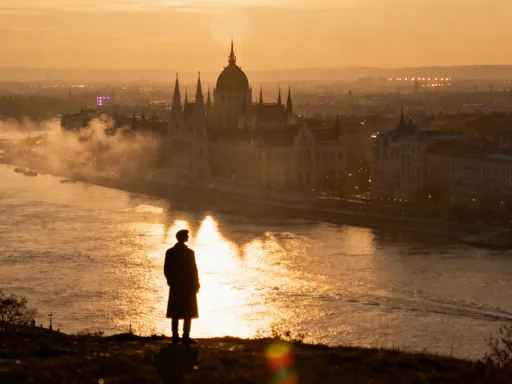
Wandering Through Time: Slow Travel in the Heart of Huế’s Heritage
Have you ever walked through a city and felt like history was whispering around every corner? That’s Huế for you. Nestled along the Perfume River, this former imperial capital isn’t about ticking off landmarks—it’s about feeling them. I wandered its ancient walls, silent courtyards, and weathered gates, discovering that the real magic lies in moving slowly and letting the past unfold at its own pace. In a world where travel often means rushing from one photo spot to the next, Huế invites a different rhythm—one of stillness, reflection, and deep connection. This is not a city to conquer, but to commune with, where every stone, every tree, and every bend in the river carries memory.
The Rhythm of Slow Travel in a Living Heritage City
Slow travel is more than a trend—it is a return to intentionality, a conscious choice to immerse rather than skim. Nowhere is this philosophy more rewarding than in Huế, Vietnam’s former imperial capital and the cultural heart of the central region. Unlike destinations designed for rapid consumption, Huế resists the hurried gaze. Its grandeur is subtle, layered in centuries of tradition, dynastic rise and fall, and spiritual depth. To move quickly here is to miss the quiet dignity embedded in its architecture and atmosphere. Instead, slow travel encourages visitors to linger, observe, and listen—to allow the city to reveal itself gradually, like a scroll unfurling in morning light.
The city’s significance dates back to 1802, when Emperor Gia Long established the Nguyễn Dynasty and made Huế its capital. For over a century, it served as the political, cultural, and spiritual center of Vietnam, housing emperors, scholars, and artisans within its fortified walls. Even after the monarchy ended in 1945, Huế retained its soul, surviving war, time, and modernization with remarkable resilience. Today, it stands as a living heritage site, where history is not confined to museums but woven into daily life—evident in the incense drifting from ancestral altars, the chants from ancient pagodas, and the craftsmanship passed through generations.
Practicing slow travel in Huế means resisting the urge to check off attractions in a single day. It means returning to the same courtyard at different hours, noticing how sunlight shifts across weathered stone, or how shadows lengthen as evening approaches. It involves engaging with local rhythms—rising with the city, pausing for tea, and allowing space for unplanned encounters. This approach fosters a deeper understanding of place, transforming sightseeing into storytelling, and observation into empathy. In Huế, time is not an enemy of travel but its greatest ally.
The Imperial Citadel: More Than Just a Fortress
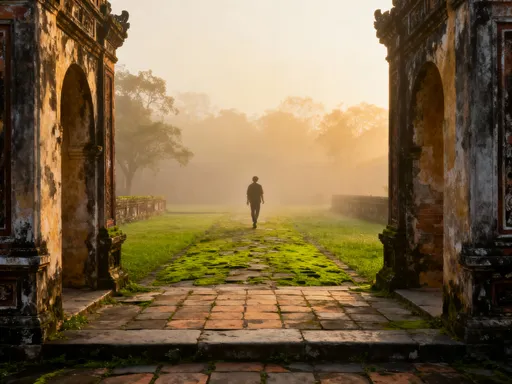
At the heart of Huế lies the Đại Nội, the Imperial Citadel, a vast complex enclosed by thick gray walls and moats that once protected the emperor and his court. Designated a UNESCO World Heritage Site in 1993, the citadel spans over 500 hectares and follows traditional geomantic principles rooted in feng shui and Confucian cosmology. Its orientation—facing east toward the sunrise—symbolizes renewal and imperial authority. The Meridian Gate, or Ngọ Môn, stands as its grand southern entrance, a five-towered structure where royal proclamations were once read and ceremonies held. Arriving at dawn, when the first light gilds its upper tiers, one can almost hear the echoes of drumbeats and courtly processions.
Walking through the citadel slowly reveals its layered history. While much of the original structures were damaged during the 1968 Tet Offensive, ongoing restoration efforts have preserved its essence. The Forbidden Purple City, once reserved exclusively for the emperor and his family, now exists mostly in foundations and partial walls, yet their quiet presence speaks volumes. Standing in its open courtyards, one feels the weight of absence—of lives lived, decisions made, and traditions upheld. Without rushing, visitors begin to notice details: the alignment of pavilions with celestial patterns, the symmetry of gateways, and the deliberate placement of trees and water features meant to harmonize human and natural order.
Slow exploration allows for emotional resonance. A bench beneath a banyan tree invites pause. The sound of birds overhead blends with distant footsteps, creating a meditative silence. Informational plaques provide historical context, but it is the atmosphere—the stillness, the scale, the sense of time suspended—that leaves the deepest impression. Families gather for quiet picnics, elders practice tai chi at sunrise, and children chase butterflies through open spaces, reminding us that heritage is not frozen but alive, adapting even as it remembers. The citadel is not merely a relic; it is a place of continuity, where past and present coexist in respectful dialogue.
Thiên Mụ Pagoda: Where History Meets Serenity
Along the northern curve of the Perfume River stands Thiên Mụ, one of Vietnam’s most revered and picturesque pagodas. Its name, meaning “Celestial Lady,” comes from a legend of an immortal woman who prophesied the founding of a royal city at this very spot. Established in 1601 and expanded over centuries, the pagoda has witnessed dynasties rise and fall, wars come and go, yet it remains a sanctuary of peace. Its iconic seven-story octagonal tower, the Phước Duyên Tower, rises gracefully against the sky, each level adorned with Buddhist statues and symbolic carvings. From a distance, it appears almost dreamlike—reflected in the river, framed by frangipani trees, and ringing with the soft chime of its bronze bell.
Reaching Thiên Mụ by boat is one of Huế’s most memorable experiences. The slow glide down the Perfume River, named for the fragrant blossoms that drift into its waters during spring, sets the tone for contemplation. The current is gentle, the air cool beneath the overhanging trees. As the shoreline approaches, the pagoda emerges gradually, first as a silhouette, then in full detail. There is no rush, no engine roar—just the quiet splash of oars and the occasional call of a kingfisher. This journey, simple as it is, becomes a ritual of arrival, preparing the visitor to enter a space set apart from the everyday.
Within the pagoda grounds, time slows further. Visitors remove their shoes before entering the main hall, where incense curls upward in delicate spirals. Monks move quietly between chambers, tending to altars and offering silent prayers. The courtyard is spacious and serene, dotted with ancient stelae inscribed with classical Chinese characters recounting imperial visits and restorations. A 1930s Austin automobile, once owned by Emperor Bảo Đại, sits preserved on the grounds—a quiet testament to the pagoda’s enduring role in national life. To sit here, even for twenty minutes, is to feel the accumulation of centuries, not as a burden, but as a quiet strength.
Royal Tombs: Poetry Carved in Stone and Landscape
Scattered along the western outskirts of Huế, the royal tombs of the Nguyễn emperors are not merely burial sites—they are philosophical statements in landscape and architecture. Each tomb reflects the personality, beliefs, and aesthetic preferences of the ruler it honors, blending art, nature, and symbolism into harmonious compositions. Unlike grandiose mausoleums meant to impress, these tombs were designed as places of meditation and balance, often nestled within gardens, beside lakes, or against forested hills. To visit them slowly is to understand them as poetic expressions of life, death, and the natural order.
The tomb of Emperor Minh Mạng, completed in 1843, is a masterpiece of symmetry and Confucian order. Its long axial pathway leads through ornamental gates, halls, and stele pavilions, all aligned with precision. Stone statues of officials, animals, and guardians line the spirit way, standing in silent vigil. Yet even within this formal structure, nature is given space—lotus ponds reflect the sky, and trees soften the stone. Reading the inscriptions, carved in classical script, one gains insight into the emperor’s vision of governance and morality. To walk this path without haste is to engage in a dialogue across time, where architecture becomes language.
In contrast, the tomb of Tự Đức, built during his lifetime as both a retreat and final resting place, exudes romantic melancholy. Surrounded by a tranquil lake and shaded by pine trees, it feels more like a royal garden than a funerary complex. The emperor, a poet and scholar, composed verses inscribed on stone tablets throughout the grounds, expressing longing, solitude, and appreciation for beauty. Hidden pavilions, lotus islands, and quiet bridges invite wandering and reflection. Sitting by the water, one can imagine the emperor strolling here in twilight, composing lines beneath the moon.
The tomb of Khải Định, though smaller and more recent, stands out for its intricate fusion of Vietnamese and European design. Built in the 1920s, it features concrete construction, mosaic tilework, and ornate carvings that reflect both tradition and colonial influence. While some view it as ostentatious, its craftsmanship is undeniable. Slow exploration reveals details invisible at first glance—the precision of dragon motifs, the play of light through stained glass, the careful placement of guardian statues. Each tomb, in its own way, teaches that legacy is not just about power, but about how one chooses to be remembered.
Hidden Corners Beyond the Guidebooks
While the citadel, pagoda, and tombs draw most visitors, Huế’s true depth lies in its quieter, less documented spaces. Just beyond the outer walls of the Imperial Citadel, narrow alleys wind through neighborhoods where families have lived for generations. Here, life unfolds at a gentle pace—grandmothers weave conical hats, children pedal bicycles down cobbled paths, and laundry flutters between ancient trees. These streets do not appear on most maps, yet they hold the soul of the city.
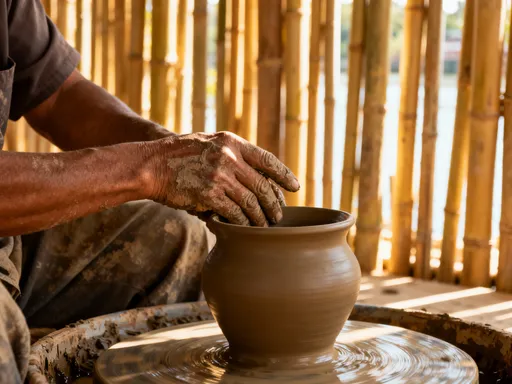
One such discovery is a small tile workshop tucked behind a quiet lane, where artisans restore traditional roof tiles using age-old methods. The scent of wet clay and wood smoke fills the air as craftsmen shape and fire tiles identical to those used in the citadel’s original construction. Conversations here are slow, often in Vietnamese, but smiles and gestures bridge the gap. To watch hands mold clay with such care is to witness heritage not as a monument, but as a living practice. These are the descendants of royal artisans, preserving skills that once adorned imperial rooftops.
Another hidden gem is a family-run tea stall near the Đông Ba Market, where elderly women serve trà cung đình—imperial-style tea—brewed with lotus, chrysanthemum, and ginger. The owner’s grandmother once prepared tea for palace staff, and the recipe has been passed down through decades. Sitting on a low stool, sipping tea from delicate porcelain cups, one feels a quiet connection to history—not through grandeur, but through continuity. These moments, unscripted and unhurried, are the rewards of slowing down, of choosing to wander without a fixed destination.
Sensory Immersion: How Time Changes Perception
When we stay longer in one place, our senses awaken. In Huế, time transforms observation into experience. The scent of lotus blooms carried on the river breeze becomes a daily greeting. The sound of rain tapping on century-old tile roofs turns into a lullaby. The taste of bún bò Huế, the city’s signature noodle soup—spicy, rich, and aromatic—evolves from a meal into a ritual, especially when enjoyed at the same corner stall each morning. These sensory impressions, gathered over days rather than hours, form a deeper memory than any photograph.
Architecture, too, reveals itself differently with time. A hurried glance at the Imperial Citadel may register only size and damage. But after several visits—at sunrise, at noon, at dusk—one begins to see patterns: how light filters through lattice windows, how moss grows in the crevices of stone, how the color of walls shifts with the weather. A single pavilion, revisited, may evoke entirely new feelings. This is the power of lingering: it allows the mind to move beyond labels and facts into feeling and intuition.
Local cuisine offers another layer of immersion. Cooking classes in Huế often focus on royal dishes—delicate steamed dumplings, lotus seed desserts, and savory pancakes once served in the palace. Preparing these meals slowly, learning the balance of flavors and the significance of presentation, becomes an act of cultural participation. Even dining in modest restaurants, where waiters share stories about family recipes, turns meals into conversations. Food, in this context, is not just sustenance but storytelling.
Equally powerful is the rhythm of daily life. Early mornings bring vendors pushing flower carts to pagodas, elders practicing qigong in public parks, and students cycling to school beneath frangipani trees. Evenings soften into golden light, with families gathering by the river, children flying kites, and musicians playing traditional đàn tranh zithers near the old city gates. To witness these moments repeatedly is to understand Huế not as a museum, but as a home—a place where history lives because people continue to live within it.
Why Huế Rewrites the Traveler’s Mindset
Traveling through Huế with slowness changes more than one’s itinerary—it changes one’s relationship to place. The city resists the consumerist model of tourism, where destinations are consumed like products and memories are reduced to social media posts. Instead, it asks for presence, patience, and humility. It teaches that understanding cannot be rushed, that beauty often hides in stillness, and that the most profound experiences are those that cannot be captured in a single frame.
Returning home, the traveler carries something intangible—a quiet wisdom, a slower heartbeat, a deeper appreciation for continuity. The lessons of Huế linger: that heritage is not just preserved in stone, but in gestures, flavors, and daily rituals. That history is not distant, but present in the way an elder folds a lotus blossom for offering, or how a craftsman shapes clay with ancestral knowledge. These are not performances for tourists, but lived traditions.
In a world that glorifies speed, Huế stands as a gentle reminder that some journeys are meant to unfold like a scroll—line by line, moment by moment. It invites us to move not to cover ground, but to deepen it. To wander not to escape, but to connect. And in that connection, to find not just the soul of a city, but a quieter, more thoughtful way of being in the world. Huế does not shout its significance. It whispers. And only those who move slowly can hear it.