Lost in the Lanes of Manama: A Shopper’s Secret Paradise
You know that thrill of finding something totally unique, not in a crowded mall, but tucked away in a quiet alley? Manama isn’t just dates and deserts—its shopping scene is a hidden goldmine. I wandered without a map and stumbled on markets where tradition meets treasure. Forget the obvious souks; this is about the real finds, the kind you won’t see anywhere else. Let me take you where the locals shop—where every purchase tells a story. In these winding lanes, shopping becomes more than a transaction; it transforms into a quiet dialogue with Bahrain’s living culture, where every scent, texture, and exchange carries a whisper of history.
Beyond the Glitz: Redefining Shopping in Manama
Manama’s reputation as a Gulf city often centers on its gleaming skyline and high-end malls, where international brands line air-conditioned corridors. Yet beneath this modern surface lies a different rhythm—one shaped by centuries of trade, craftsmanship, and community. The true essence of shopping in Bahrain’s capital isn’t found behind glass cases in climate-controlled stores, but in the open-air markets and narrow alleys where Bahrainis have shopped for generations. These are not curated for tourists or staged for social media. They are real places, lived-in and unpolished, where daily life unfolds alongside commerce.
What makes these spaces special is their authenticity. In neighborhoods like Fereej Al Muqabil or near the Bab Al Bahrain entrance, small family-run shops display hand-stitched textiles, locally harvested honey, and hand-carved wooden boxes without the markup of souvenir stalls. Here, shopping is not about consumption but connection. Vendors remember regular customers, greet them by name, and offer advice as if guiding a relative. This personal touch transforms a simple errand into an experience rooted in trust and tradition. For the mindful traveler, stepping into these spaces means stepping into the heart of Bahraini daily life.
The contrast between these local markets and the city’s luxury retail centers couldn’t be starker. While the City Centre Mall offers convenience and comfort, it lacks the soul found in a spice vendor’s weathered hands or the pride in a potter’s voice when explaining how their craft has been passed down through three generations. To shop in Manama authentically is to embrace imperfection—the uneven stitch in a woven bag, the slight variation in a ceramic glaze, the soft crackle of paper-thin baklava being wrapped in parchment. These imperfections are not flaws; they are proof of human touch.
The Souk You’ve Never Heard Of: Exploring Small-Scale Markets
A few steps from the grand dome of the Manama Grand Mosque, away from the tour buses and guidebook checklists, lies a vibrant vegetable souk that most visitors never see. This is not a postcard-perfect market arranged for photographs, but a working marketplace where baskets overflow with pomegranates from nearby farms, bunches of mint and parsley drip with morning dew, and sacks of turmeric and cumin spill golden dust onto the pavement. The air hums with the chatter of housewives haggling over prices, the clatter of plastic crates, and the occasional call to prayer echoing from the minaret above.
Here, the sensory experience is overwhelming in the best way. The scent of fresh coriander mingles with the sharp tang of preserved lemons. A vendor offers a taste of ripe figs, their sticky sweetness bursting on the tongue. Nearby, an elderly woman arranges handwoven palm frond baskets—used for carrying bread or fruit—each one slightly different in pattern and size. These are not souvenirs; they are tools of everyday life, still made the old way because they work.
Further into the older residential zones, tucked between apartment buildings and corner mosques, small craft stalls appear almost by accident. One might specialize in handmade soaps infused with desert herbs, another in brass incense burners shaped like dhow boats. These stalls rarely have signs or prices listed. Instead, you engage—ask questions, show interest, and often receive a story in return. Bargaining here feels natural, even gentle. It’s not a performance but a mutual negotiation, where both buyer and seller leave feeling respected. There’s no pressure to buy, only an invitation to participate.
What sets these markets apart is their lack of pretense. There’s no lighting designed for Instagram, no staff trained to charm foreigners. What you see is what is real: a woman sorting lentils by hand, a man repairing a wooden tray with nails and glue, children darting between stalls after school. To wander these lanes is to witness the quiet dignity of ordinary work, the kind that sustains communities more than any grand development ever could.
From Pearls to Pottery: Hunting for Authentic Local Crafts
Bahrain’s legacy as a pearl trading hub dates back thousands of years, long before oil reshaped the Gulf’s economy. Though the pearl industry has diminished, the tradition of fine craftsmanship endures in small workshops scattered across Manama. In quiet alleys of the old city, artisans still shape pearls into delicate necklaces, set them in silver with intricate filigree, and pass down techniques that predate modern machinery. Finding these workshops requires curiosity and a willingness to look beyond storefronts with flashy displays. Often, they are marked only by a simple wooden sign or an open door revealing the soft clink of tools at work.
One such studio, run by a third-generation jeweler in a modest compound near Muharraq’s edge, operates much as it did in the 1950s. The master craftsman sits cross-legged on a low stool, magnifying glass in one eye, tweezers in the other, carefully placing tiny pearls into a floral design. His apprentice, a nephew in his twenties, learns the trade slowly, mastering each step before moving on. Visitors are welcome, not as customers but as guests. Tea is served in small glasses, and stories are shared about diving boats and the days when pearl merchants from India and Persia came to Bahrain seeking the finest gems from the Arabian Gulf.
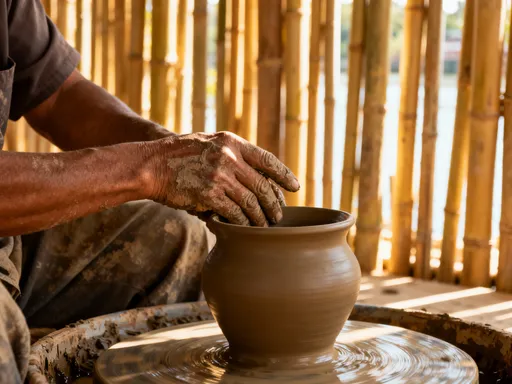
Equally enduring is the art of Bahraini pottery. In a sunlit workshop off a dusty lane in Salmabad, a family shapes clay using methods unchanged for generations. The potter’s wheel spins by hand, powered by foot, and each vessel is smoothed with a seashell. The pieces—bowls, water jars, decorative plates—are fired in a simple kiln and glazed with natural pigments. What makes these items valuable is not their perfection but their continuity. When you hold a hand-thrown bowl, you’re touching something made the same way your ancestors might have used centuries ago.
For travelers, the challenge lies in distinguishing genuine craftsmanship from mass-produced imitations sold in tourist areas. Real handmade pieces often have slight irregularities—uneven edges, subtle color variations, or hand-signed marks on the underside. They may cost more, but they carry meaning. Buying directly from artisans ensures that your money supports preservation, not just profit. It also opens the door to deeper understanding: learning how a perfume blend is made from local oud and rose, or how a date syrup is slow-cooked in copper pots over wood fires. These are the stories that turn souvenirs into heirlooms.
The Art of the Find: Strategies for Mindful Shopping
Finding these hidden treasures doesn’t happen by chance. It requires intention, patience, and a few simple strategies that go beyond simply following a map. The first rule is timing: arrive early in the morning. This is when markets are busiest with locals, when produce is freshest, and when artisans are most likely to be at work. By mid-morning, many small vendors begin to close, retreating from the rising heat. A 7 a.m. stroll through the vegetable souk offers not just better selection but richer interaction.
Dressing appropriately also matters. While Manama is relatively cosmopolitan, modest clothing—long sleeves, covered shoulders, and non-revealing attire—helps you blend in and shows respect. It signals that you’re not just passing through but making an effort to engage on local terms. This small gesture often opens doors: a vendor may offer you a seat, invite you to taste something, or share a family recipe for spice mix.
Language, even in small doses, builds bridges. Learning a few basic Arabic phrases—"Keif halak?" (How are you?), "Shukran" (Thank you), "Kam al-si’r?" (How much is it?)—goes a long way. It shows curiosity and respect. Even if your pronunciation is imperfect, the attempt is appreciated. Many older vendors do not speak English fluently, but a smile and a simple phrase can lead to a surprisingly deep exchange.
Equally important is the practice of observation. Before buying, spend time watching how locals interact, what they purchase, how they negotiate. Notice which stalls are frequented by Bahrainis, which ones have items stacked neatly by regular customers. Build rapport before making a transaction. Ask about the origin of a product, compliment the craftsmanship, show genuine interest. More than once, such moments have led to an invitation into the back room of a shop, where a vendor’s mother demonstrates how to properly burn bakhoor (traditional incense) or where a craftsman pulls out a family album showing decades of work. These are the unplanned moments that become the most memorable parts of a journey.
When Tradition Meets Trend: Emerging Designers & Urban Boutiques
While traditional crafts remain vital, a new generation of Bahraini creatives is reimagining heritage through a contemporary lens. In neighborhoods like Adliya and Juffair, small ateliers and boutique studios are emerging as quiet hubs of innovation. These are not large retail stores but intimate spaces—sometimes no bigger than a living room—where young designers display collections that blend Islamic geometric patterns with minimalist silhouettes, or transform traditional embroidery into modern accessories.
One such designer, a Bahraini woman in her early thirties, runs a studio from her family home. Her work features delicate hand-stitched thobes (traditional dresses) updated with sleek cuts and neutral tones, making them wearable for both formal events and everyday elegance. Each piece is made in limited runs, often customized to the client’s measurements and preferences. Her studio doubles as a gallery, where visitors are encouraged to touch the fabrics, ask questions, and even sit in on a fitting. There’s no pressure to buy—only an invitation to appreciate the craft.
Another boutique specializes in jewelry inspired by ancient Bahraini symbols—Dilmun seals, palm fronds, and wave motifs—rendered in sterling silver and rose gold. The pieces are delicate, understated, and deeply meaningful. A simple pendant might represent the unity of land and sea, a theme central to Bahrain’s identity as an island nation. These designers are not rejecting tradition; they are evolving it, ensuring that cultural motifs remain relevant in modern life.
What makes these boutiques special is their commitment to sustainability and ethical production. Materials are sourced locally when possible, packaging is minimal, and workers are paid fairly. Many designers collaborate directly with older artisans, bridging generations and keeping skills alive. By supporting these creatives, travelers contribute to a cultural ecosystem that values both heritage and innovation. A purchase here is not just an acquisition—it’s an endorsement of a vision where beauty, meaning, and responsibility coexist.
Logistics & Local Wisdom: Navigating Manama Like a Resident
To fully embrace this kind of shopping experience, practical considerations matter. Transportation in Manama is straightforward, and the regional ride-hailing app Careem is widely used and reliable. Unlike taxis, which may not always go to less touristy areas, Careem drivers are familiar with residential neighborhoods and will take you directly to a market entrance or boutique door. For those who prefer public transport, the Bahrain Bus network connects major areas, though routes can be confusing for first-time users. A small map or digital guide helps, but don’t be afraid to ask—locals are often happy to point the way.
Timing your visits wisely enhances comfort and access. The Gulf heat can be intense, especially between noon and 3 p.m. Early mornings or late afternoons are ideal for walking. Many small vendors close during the midday peak, so plan your route accordingly. Pairing shopping with a stop at a local café offers both refreshment and insight. A small stall serving karak tea—spiced, sweet, and poured from a height—provides a moment to rest and observe. Sit on a low stool, watch the world go by, and let the rhythm of the neighborhood settle into your pace.
Cash remains essential in smaller markets. While larger boutiques may accept cards, most traditional vendors operate on a cash-only basis. Carry small bills to make transactions smoother and to avoid the awkwardness of breaking large notes. Haggling is expected in many places, but it should be done respectfully. Start with a polite smile, ask the price, and offer a reasonable counter—usually 20–30% below. If the seller refuses, accept it gracefully. The goal is not to win but to engage in a fair exchange.
One of the most profound gestures you might encounter is an invitation into a shopkeeper’s private space—perhaps a back room, a courtyard, or even their home. This is not common, but when it happens, it is a sign of deep respect. Accept with gratitude, remove your shoes if asked, and accept tea or water as a sign of goodwill. These moments are rare and precious, born of genuine connection rather than transaction. They remind us that the heart of travel is not in what we collect, but in the relationships we form along the way.
Why It Matters: The Deeper Value of Authentic Shopping
At its core, off-the-radar shopping in Manama is about more than acquiring objects. It is about participating in a living culture, one that values craftsmanship, community, and continuity. Each hand-thrown bowl, each bottle of locally distilled rose water, each intricately woven basket carries within it the labor of hands that have shaped such items for generations. When you buy directly from the maker, you become part of a chain that stretches far beyond the moment of purchase.
These experiences also foster sustainability in a meaningful way. Unlike mass-produced goods shipped across continents, locally made items have a smaller environmental footprint and support economic resilience. They reduce reliance on imports and keep skills alive that might otherwise fade. In a world where so much is disposable, choosing something handmade is an act of quiet resistance—an affirmation that quality, care, and story matter.
But perhaps the greatest reward is intangible: the sense of connection. In a small pottery workshop, a shared cup of tea can lead to a conversation about family, faith, and the changing face of Bahrain. In a spice stall, a vendor might explain how his grandmother used a particular blend to soothe coughs or celebrate Eid. These exchanges enrich the traveler far more than any object ever could. They dissolve the barrier between visitor and local, reminding us that despite our differences, we share common values—pride in work, love of home, and the desire to pass something meaningful to the next generation.
True travel enrichment doesn’t come from filling a suitcase with souvenirs. It comes from the moments that linger—the warmth of a handshake, the scent of cardamom in the air, the sound of laughter in a language you don’t fully understand but feel in your heart. Manama’s hidden lanes offer more than shopping; they offer a chance to slow down, to listen, and to remember that the best discoveries are not found on maps, but in the quiet spaces between words, where culture lives not as performance, but as truth.